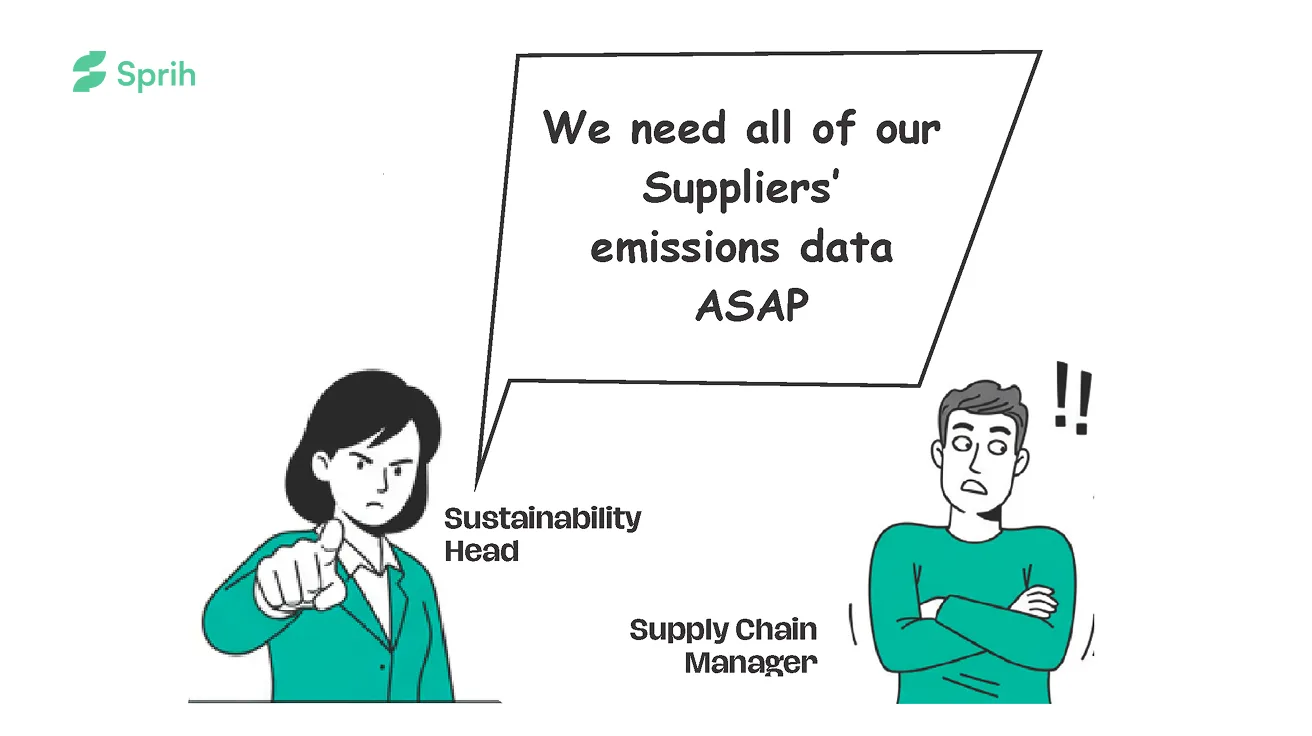

Sustainability teams are drowning in spreadsheets. Your CFO has three versions of the emissions inventory. The investor relations team is asking for data that lives in a siloed spreadsheet run by one person who’s about to go on leave. Regulatory deadlines are tightening—CSRD, BRSR, SB 253—and your current manual sustainability reporting process can’t scale. You’re not alone: according to recent surveys, over 60% of enterprises still rely on Excel and manual processes for sustainability data management, leading to a 40% increase in time spent on data gathering and verification.
Here’s the uncomfortable truth: if your sustainability reporting still depends on spreadsheets and manual workflows, you’re operating at a competitive disadvantage. And you’re exposed to real regulatory and investor risk. This is where AI-native sustainability reporting comes in—and 2026 is the inflection point where leading companies are making the leap from legacy, bolted-on tools to genuinely intelligent, purpose-built platforms.
Let’s talk about what AI-native actually means, why it matters, and how it transforms sustainability reporting from a compliance burden into a strategic advantage.
The sustainability software market is crowded with vendors claiming AI capabilities. But there’s a critical distinction you need to understand: AI-native vs. AI-bolted-on.
AI-bolted-on platforms are legacy tools that existed before AI became central to their architecture. They’ve added AI features on top—maybe some predictive alerts or basic automations—but the core data model, workflow, and reporting engine still work like they did 10 years ago. You’re still manually uploading CSVs, manually mapping data across frameworks, and AI is just doing surface-level cleanup.
AI-native, by contrast, is built from the foundation with machine learning and intelligent automation baked into every layer. From data ingestion to emissions calculation to report generation, AI is actively working to:
The difference? AI-native platforms reduce your manual sustainability reporting effort by 40-60%. They also cut data errors by up to 30% because AI doesn’t get tired or make copy-paste mistakes.
Your emissions data lives everywhere: ERP systems, utility bills, logistics software, facility management platforms, employee travel databases. Traditionally, someone sits down with a spreadsheet and manually pulls numbers from each source, converts units, fixes formatting—and introduces errors.
AI-native platforms connect directly to your data sources via APIs or intelligent data connectors. They automatically ingest raw data, normalize inconsistent units and formats, and flag missing or suspicious values before they enter your inventory. One enterprise cut their data collection time from 8 weeks to 2 weeks by automating this process.
Here’s the frustration: the same emissions inventory needs to be reported in different ways across CSRD, BRSR, GRI, ISSB, TCFD, and the GHG Protocol. Each framework has different scope definitions, calculation rules, and disclosure requirements. Manually mapping the same data to each framework is tedious and error-prone.
AI-native systems understand the semantic differences between frameworks. Input your data once, and the platform automatically applies the correct calculation rules, boundary definitions, and disclosure logic for CSRD, BRSR, GRI, and beyond. No more reinventing the wheel for each report.
A utility bill spikes 150% month-over-month. An employee travel expense suddenly doubles. A Scope 3 supplier’s emissions data looks like an outlier. In a spreadsheet-based process, these anomalies are easy to miss until the auditor spots them in December.
AI systems flag anomalies in real time using statistical models trained on your historical data. It’s like having a data quality auditor working 24/7, checking every number against expected patterns. This not only catches genuine errors—it also strengthens your audit trail because you can document that anomalies were investigated and explained.
AI doesn’t just report on the past; it looks ahead. By analyzing your historical emissions trends, operational patterns, and planned capital investments, AI can model future scenarios:
This transforms sustainability reporting from a rear-view mirror into a strategic planning tool.
The most time-consuming part of sustainability reporting isn’t actually the data—it’s the narrative. Explaining why emissions changed, contextualizing performance against targets, connecting data to business strategy, and crafting compelling stories for investors and stakeholders.
AI-native platforms generate audit-ready narratives automatically. Instead of spending weeks writing report text, your team spends hours reviewing and refining AI-drafted language. One sustainability director told us this cut their report writing time by 60%.
The consequences of poor sustainability reporting are no longer theoretical:
This is why leading enterprises are moving away from spreadsheets. It’s not about compliance theater—it’s about building a data infrastructure that enables genuine sustainability progress.
If you’re evaluating tools, here are the key indicators that a platform is truly AI-native (not just AI-adjacent):
Platforms like Sprih that were purpose-built for AI-native sustainability reporting from day one deliver all six of these capabilities. Their SustainSense AI engine handles the heavy lifting of data normalization, anomaly detection, and multi-framework mapping, while ReportSense generates narrative-ready reports that your sustainability team can customize and publish in days, not months.
2026 is the tipping point. Regulatory pressure is accelerating, investor scrutiny is intensifying, and the technology to actually solve the sustainability reporting problem is now mature. Companies that continue to rely on spreadsheets will find themselves constrained: slower to report, more exposed to errors, and unable to drive real decarbonization because they can’t get reliable data to their decision-makers.
The enterprises that are winning are the ones moving to AI-native platforms now. They’re automating drudgery, improving data quality, scaling across multiple frameworks, and spending their teams’ time on strategy instead of data wrangling.
The question isn’t whether your company will move to AI-native sustainability reporting. The question is whether you’ll move first or follow.
Ready to make the leap? See how Sprih’s AI engine transforms sustainability reporting—from data collection to audit-ready disclosure. Book a demo today and see how your team could cut sustainability reporting time in half while improving accuracy.