
For years, spreadsheet carbon tracking has been the go-to method for organizations looking to measure their environmental impact. But as sustainability reporting becomes both more complex and more vital, the limitations of manual tracking are becoming impossible to ignore. Enter automated carbon accounting—a game-changer for professionals aiming to streamline their processes, reduce errors, and make data-driven climate decisions.
This blog will walk you through the evolution from Excel-based systems to automated solutions, highlighting real-world benefits, challenges, and best practices for building a carbon accounting system that truly works.
Spreadsheets like Excel or Google Sheets are familiar, flexible, and accessible. For small organizations or those beginning their sustainability journey, these tools suffice. But as carbon reporting demands grow, so do the cracks in this approach:
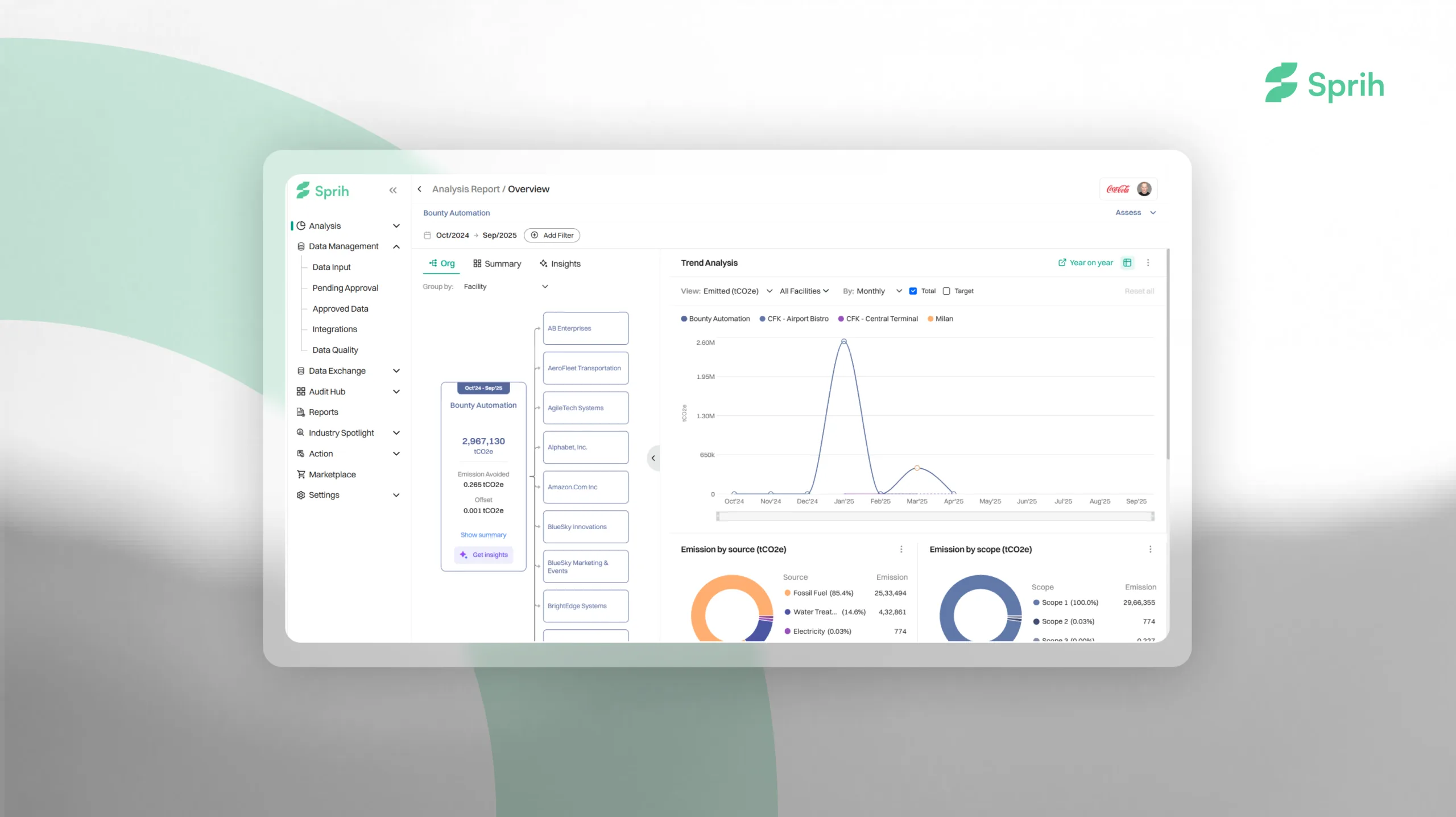
Automated carbon accounting refers to the use of dedicated software platforms and integrations that collect, process, and report emissions data with minimal manual intervention.
These systems typically:
Automation frees your sustainability team to focus on strategy and action, not endless data wrangling.
Automated platforms standardize data collection, reducing human error and ensuring consistent application of emissions factors. This is critical for reliable reporting—especially when regulatory scrutiny is increasing.
Teams spend less time collecting and cleaning data. For example, many of Sprih’s customers reduced their carbon reporting cycle from months to weeks after automating data flows.
With real-time analytics, organizations can identify hotspots, model reduction scenarios, and set more ambitious targets. Automated carbon accounting transforms data from a burden into a strategic asset.
Automated systems log every data point and calculation, making it easier to satisfy external auditors or respond to investor queries.
Look for solutions that:
Tip: Prioritize platforms with strong customer support and proven client case studies.
Transitioning from spreadsheets to automation isn’t always seamless. Here’s how to tackle frequent hurdles:
As regulations tighten and investors demand better Sustainability data, automated carbon accounting is no longer a luxury—it’s a necessity. Companies that automate now will not only keep pace with compliance but gain a competitive edge through smarter, faster climate action.
Moving from spreadsheet carbon tracking to automated carbon accounting transforms how organizations measure, manage, and reduce their environmental impact. The shift enables accuracy, agility, and insight—empowering sustainability leaders to focus on what matters: driving real change.
Ready to Upgrade? See How Sprih Helps with Automated Carbon Accounting.
Curious how automation can transform your sustainability reporting? See how Sprih’s automated carbon accounting platform streamlines the journey from spreadsheet to strategic action.