
Meeting net zero goals is no longer just a visionary statement, it’s a tangible target for forward-thinking companies worldwide. But how do organizations truly measure their progress toward carbon neutrality? The answer lies in robust net zero carbon accounting. This process is the backbone of credible climate commitments, providing the data and transparency needed to chart a path to real emissions reductions.
In this blog, we’ll unpack how net zero carbon accounting works, why it’s essential, and how it empowers companies to deliver on their sustainability promises.
At its core, net zero carbon accounting is the meticulous process of measuring, tracking, and reporting greenhouse gas (GHG) emissions. It involves quantifying all emissions—direct and indirect—that a company is responsible for across its operations and value chain.
Why is this important? Because achieving net zero requires more than offsetting emissions with green projects. It demands a deep understanding of where emissions are generated, how they’re reduced, and what residual emissions need to be neutralized.
When accounting for emissions, most organizations follow the Greenhouse Gas Protocol framework, which divides emissions into three scopes:
Accurate net zero carbon accounting covers all three scopes, ensuring nothing slips through the cracks.
The world’s leading companies—think Microsoft, Unilever, and IKEA—recognize that carbon neutrality starts with credible data. Here’s why robust carbon accounting is essential:
Without granular data, companies risk underestimating where their biggest impacts lie. For example, a tech firm might focus on office electricity (Scope 2), but discover through carbon accounting that its greatest emissions come from the supply chain (Scope 3). This insight is pivotal for prioritizing reduction efforts.
Transparency is under the microscope. Net zero claims backed by solid accounting are less likely to attract accusations of greenwashing or regulatory scrutiny. Reporting standards like the Task Force on Climate-related Financial Disclosures (TCFD) and CDP (formerly Carbon Disclosure Project) require detailed, auditable data.
Sustainability is a major decision factor for investors and consumers. According to McKinsey, over 80% of investors consider ESG (Environmental, Social, and Governance) performance in their decisions. Robust net zero carbon accounting signals trustworthiness and minimizes reputational risk.
You can’t manage what you don’t measure. With accurate accounting, companies set science-based targets, monitor progress, and adjust strategies in real time.
Ready to build a credible carbon neutrality roadmap? Here’s how to get started:
Determine which operations, subsidiaries, and value chain partners to include. Materiality assessments ensure the most significant emissions are prioritized.
Gather data from energy bills, supplier reports, travel logs, and more. When data is missing, use credible estimation methods—but always aim to improve data quality over time.
Use recognized methodologies like the GHG Protocol or national frameworks. Many companies adopt digital tools to automate calculations and reduce errors.
With a clear emissions baseline, set science-based targets aligned with the Paris Agreement. This often means aiming for at least a 50% reduction by 2030.
Regularly update your emissions data, report transparently (e.g., via CDP), and refine strategies as you progress. Continuous improvement is key for reaching net zero.
As regulations tighten and stakeholder expectations rise, net zero carbon accounting is evolving. Companies are moving beyond spreadsheets to integrated digital platforms and blockchain verification for real-time, immutable data.
Artificial intelligence is emerging as a powerful tool to analyze emissions patterns and predict the impact of reduction initiatives. This accelerates decision-making and helps companies stay ahead of compliance deadlines.
Net zero carbon accounting isn’t just a compliance exercise—it’s the engine that drives credible, impactful climate action. Companies that invest in accurate measurement, transparent reporting, and continuous improvement are best positioned to meet their net zero goals and build lasting trust.
Ready to empower your organization with smarter carbon accounting?
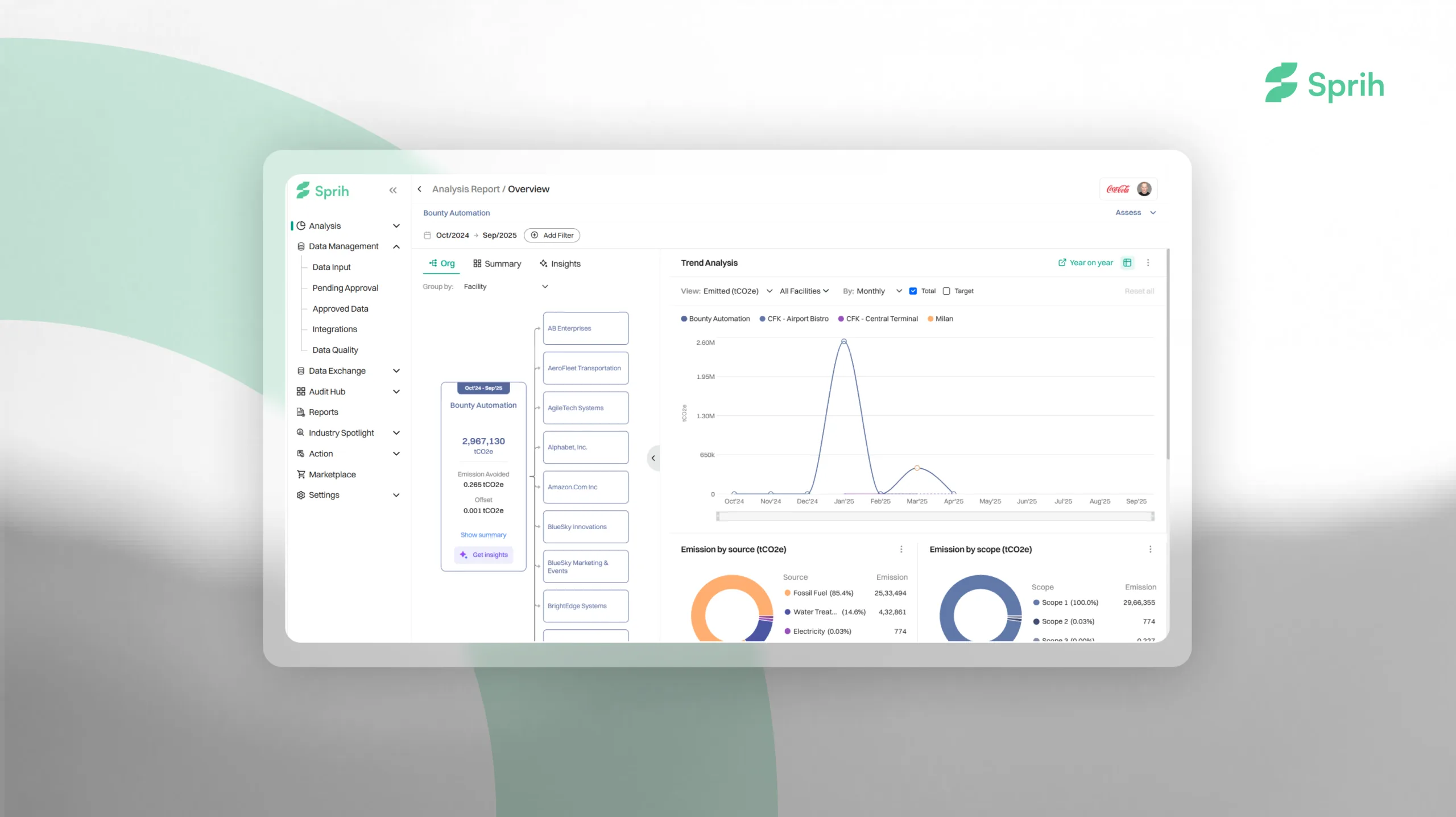
See how Sprih helps with this.