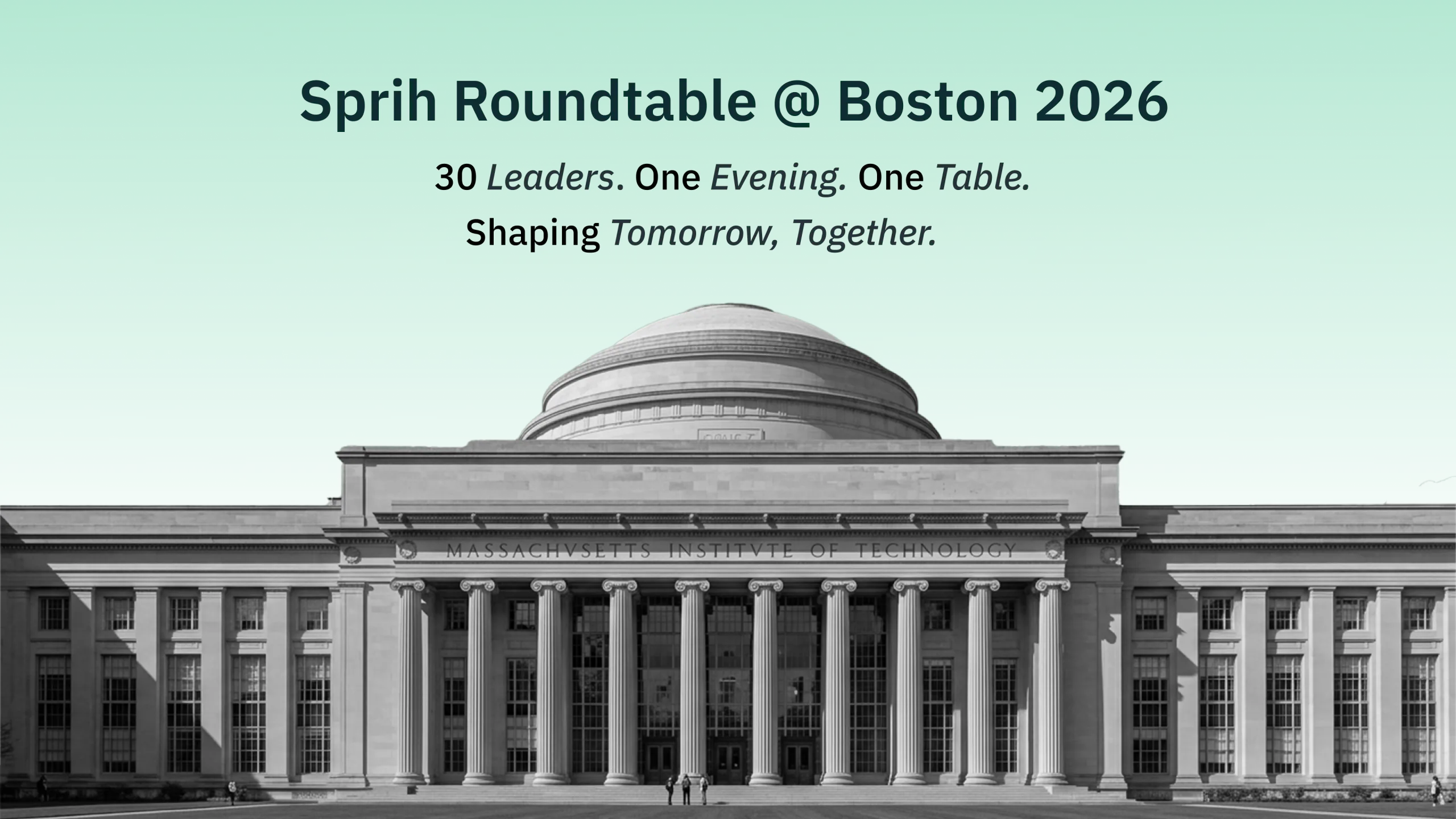
On April 15th, we gathered 30 senior leaders in Boston for the third edition of our roundtable series. It was, without exaggeration, the most energizing evening I could have imagined.
We started this series with a simple intention: get the right people in the same room and talk about what actually matters. Not the theater of sustainability conferences. Not the carefully scripted panels. Just honest dialogue about the challenges and opportunities that keep these leaders awake at night.
This time, something crystallized.
The conversation revealed a sharp truth: sustainability has crossed a threshold. It's no longer about checking boxes or satisfying compliance requirements. When you sit with people who've spent decades understanding what sustainability means at an operational level, they speak in the language of business—risk mitigation, competitive advantage, supply chain resilience, cost implications.
They don't talk about it as a cost center. They talk about it as a strategic imperative.
Jay Koganti moderated a panel with Jeffrey Richards, Sreedevi Rajagopalan, Jeff Blankman, Asheen Phansey, and Jillian James that went somewhere unexpected. Rather than the typical recitation of organizational achievements, Jay steered the conversation toward personal journeys. Why did each person choose this path? What made them become sustainability leaders in the first place?
What emerged was extraordinary. Every person in that panel had a story that was deeply personal, often surprising, always inspiring. And it reminded everyone in the room why we do this work in the first place: to inspire each other, to learn from each other's battles, and to push each other forward.
The conversation didn't stay abstract for long. Real questions surfaced. Hard questions.
How do we quantify the cost of inaction when the parameters keep shifting? How do we prepare for cascading supply chain risks as climate regulations and physical threats evolve simultaneously? How do we move from compliance theater to genuine business intelligence?
Two themes dominated the evening:
First, the direct cost implications of not acting. While quantification remains challenging due to the dynamic nature of climate risks, the room agreed: there is a real, measurable cost to inaction. Companies that treat sustainability as optional are accumulating hidden liabilities.
Second, supply chain vulnerability. As climate-related regulations multiply and physical risks intensify, the complexity of managing global supply chains is becoming exponential. The leaders in that room weren't debating whether this was a problem—they were comparing notes on how to solve it.
This was a high-density dialogue among people actively building the future from different vantage points—airlines, manufacturing, finance, logistics, research institutions.
To honor the leaders who joined us, we planted a tree in each of their names through 14Trees—a small but symbolic gesture reflecting the long-term mindset that this work demands.
The core insight from the evening:
Sustainability cannot be seen in isolation. It has social impact. It has business impact. The sooner we accept this reality, the sooner we can prepare for the future that's already arriving.
These roundtables are not events. They're becoming a community of intent—leaders who understand that real transformation doesn't start with announcements, but in rooms where people feel safe enough to be honest, curious enough to listen, and bold enough to rethink assumptions.
If you're reading this and thinking, "I wish I'd been there," you're not alone.
That's exactly the point.
We're building something here: a network of leaders who don't just talk about sustainability—they embed it into business strategy, operational decisions, and long-term thinking.
This is just the beginning.
Akash Keshav
CEO & Co-Founder